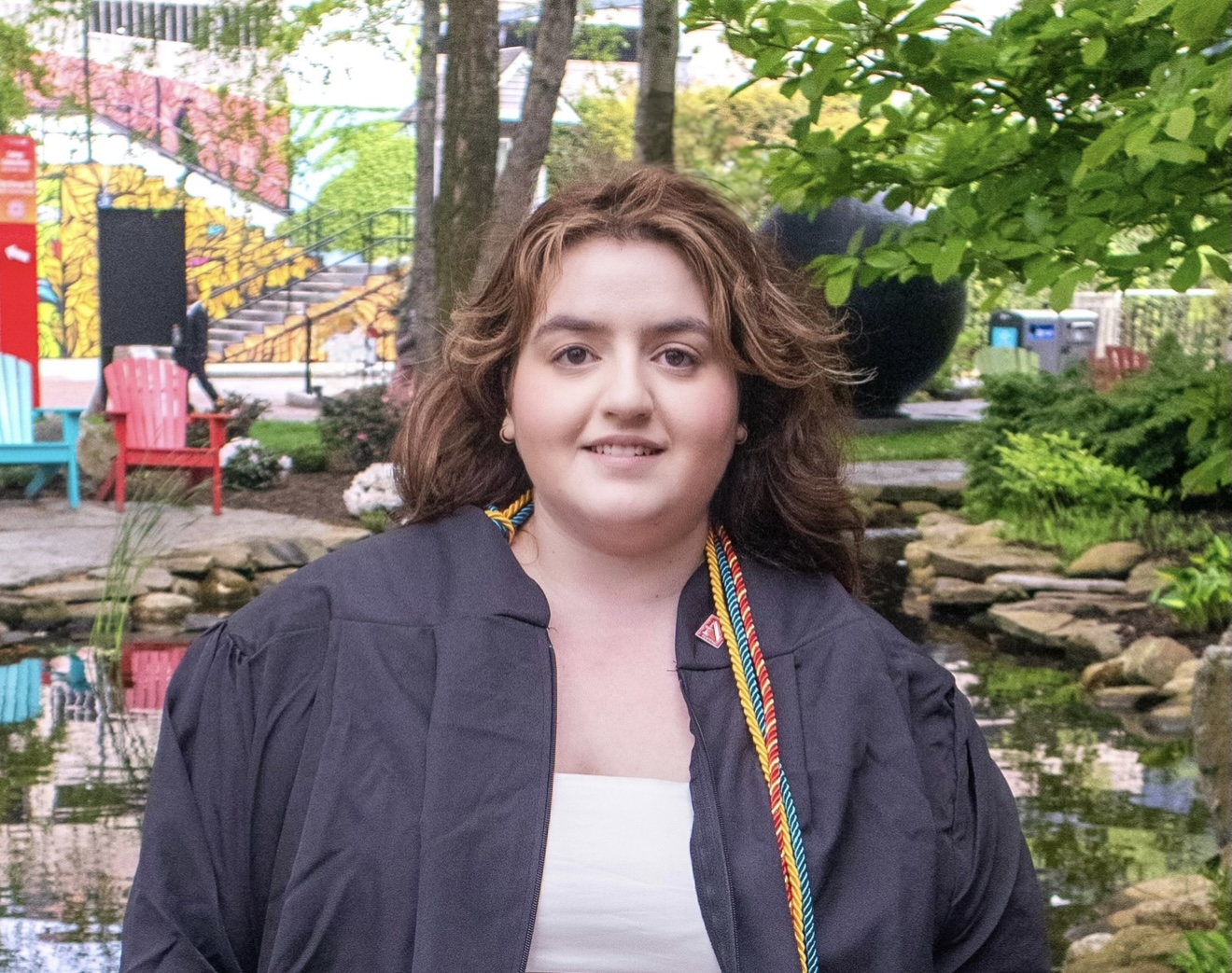
Name: Cassandra Alves, M.S.
Earned Degree(s): B.S. Speech-Language Pathology and Audiology, M.S. Speech-Language Pathology
Program of Study/Year in Program: Recent graduate of Northeastern University’s SLP program
Mentor/Advisor: Dr. Erin Meier
ANCDS Fellow Mentor: Catherine Castillo, M.A., CCC-SLP, CBIS
Area(s) of research, teaching, and/or clinical interest: Tracheostomy and ventilator-dependent patients, dysphagia, and best rehabilitation practices for stroke and TBI recovery
Why were you interested in the ANCDS student fellow program?
I was interested in the ANCDS Fellow Program because I have always had a strong interest in neuro and neuroanatomy. My interest in neuro really grew during my time as a rehab aide at Spaulding Rehabilitation Hospital in Charlestown, where I was able to see patients recovering from strokes and TBIs and learn more about the rehabilitation process. I also had the opportunity to be a TA for Northeastern’s Neurology of Communication course, which further increased my interest in neurogenic communication disorders. I wanted to continue learning about the field, meet people who shared similar interests, and learn more about the different paths people have taken within neuro.
What did you enjoy about the ANCDS student fellow program?
I really enjoyed meeting with my mentor, Catherine Castillo, as well as meeting the other fellows and members of ANCDS. I especially enjoyed being able to learn from Catherine’s experience and talk with her about different aspects of clinical practice and transitioning into the field. I also enjoyed hearing about the research currently being done by different members and having access to the resources provided through ANCDS. It was great to be around other people who share similar interests in neuro and to hear about the different paths people have taken within the field.
Why would you recommend the ANCDS student fellow program to future students?
It is an amazing opportunity to meet clinicians and researchers who are interested in neurogenic conditions and are currently practicing or conducting research in the field. Being paired with a mentor, like Catherine was for me, is also a great opportunity to have someone to learn from and ask questions as you begin thinking about your career and next steps. I found the mentorship aspect especially helpful as I was preparing to enter the field and navigate the transition from graduate school into my career. I also think being able to connect with other fellows and members of ANCDS is a great way to build your professional network early in your career.
Based on this first introduction to ANCDS, what are the benefits for students, clinicians, and/or researchers?
I think one of the biggest benefits of ANCDS is having access to a community of students, clinicians, and researchers who share an interest in neurogenic communication disorders. For students and newer clinicians, it provides opportunities for mentorship, networking, and learning about different areas of the field. It also gives clinicians and researchers the opportunity to share their work, learn from others, and stay up to date on current research. Having access to these connections and resources can be especially valuable when you are still figuring out what areas of neuro you want to pursue.
Describe your current research and/or clinical work.
I am currently a Clinical Fellow at Shrewsbury Skilled Rehab and Nursing, where I work with patients with a variety of neurogenic and cognitive-linguistic disorders. My current caseload includes patients recovering from strokes as well as individuals with dysphagia, cognitive-communication disorders, and dementia. I recently wrapped up my time in The Aphasia Network (TAN) Lab at Northeastern University, run by Dr. Erin Meier. While in the lab, I was involved in behavioral testing related to the effectiveness of subacute rehabilitation following stroke. I was also involved in a study looking at the use of smartwatch-based therapy to target word retrieval and anomia in individuals with post-stroke aphasia. My clinical and research experiences have allowed me to see different aspects of neurorehabilitation and have continued to strengthen my interest in working with this population.
Describe how your fellowship experience has continued to impact your clinical and/or research work since last fall.
My fellowship mentor, Catherine Castillo, has been a great resource as I have transitioned from graduate school into my career as an SLP. She has helped me navigate the job search and interview process and has also helped me learn more about clinical decision-making in an acute care setting. These conversations have given me a better understanding of what working in acute care can look like and have helped me think more about my own future clinical goals. My current clinical experience in SNF rehabilitation has also continued to build my interest in working with patients with neurological conditions. As I continue to develop my skills, I hope to eventually transition into an acute care setting where I can continue working with patients with complex medical needs, including tracheostomy and ventilator-dependent patients.